AI Act: securing AI becomes an obligation on 2 August
On 2 August 2026 a little-reported piece of the European AI Act kicks in: the obligations for high-risk AI systems listed in Annex III. Among them is …
Continue reading →
Topic · Compliance
The European rules governing security and data — and why they're not just red tape.
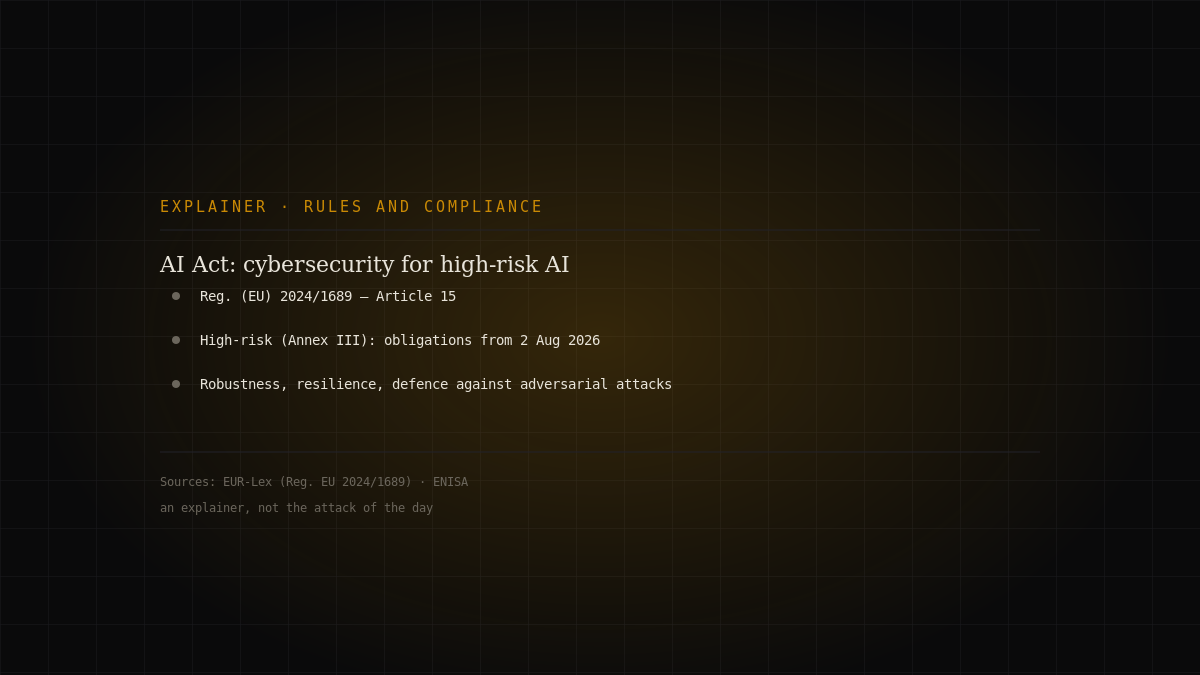
On 2 August 2026 a little-reported piece of the European AI Act kicks in: the obligations for high-risk AI systems listed in Annex III. Among them is …
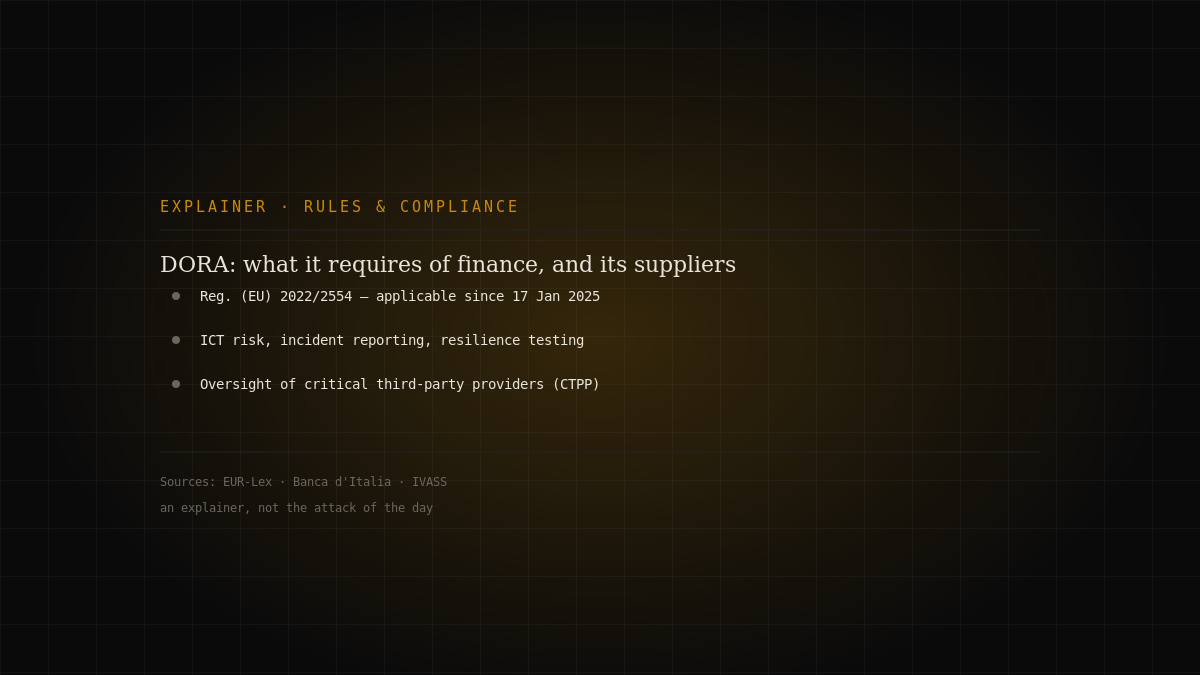
Not an attack, but the resilience framework the European financial sector must hold up under when incidents hit. Regulation (EU) 2022/2554 — DORA, the…
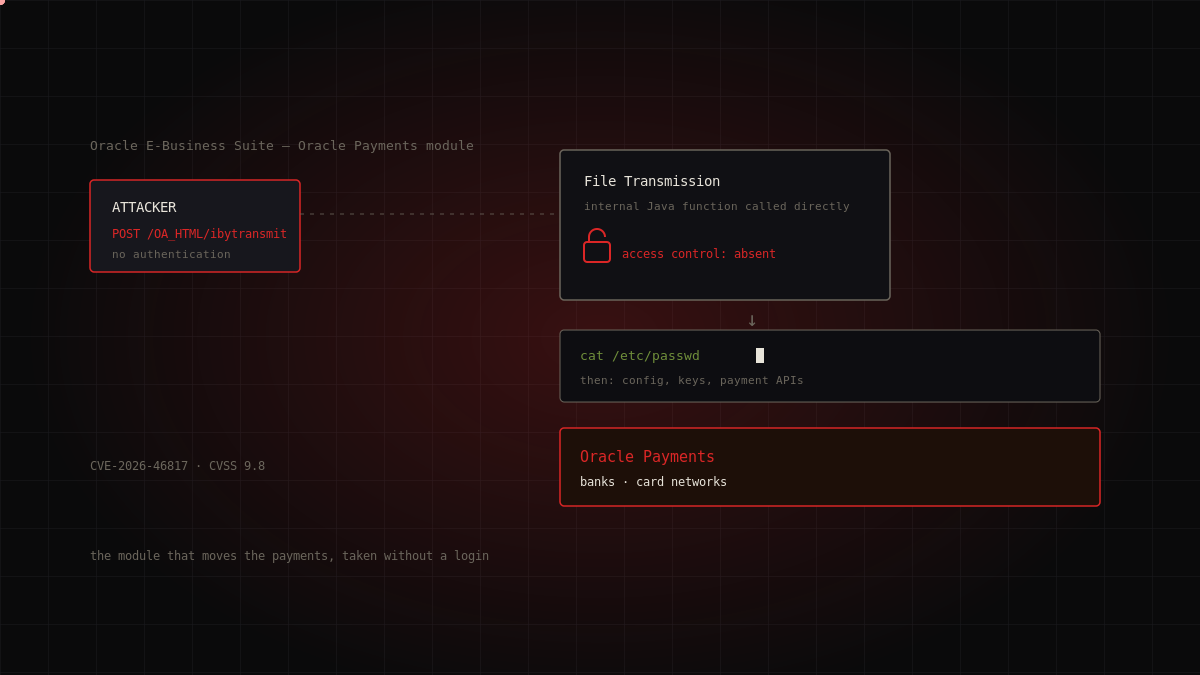
Oracle Payments is the payment engine inside Oracle E-Business Suite: the point where the company's finance applications talk to banks and card n…
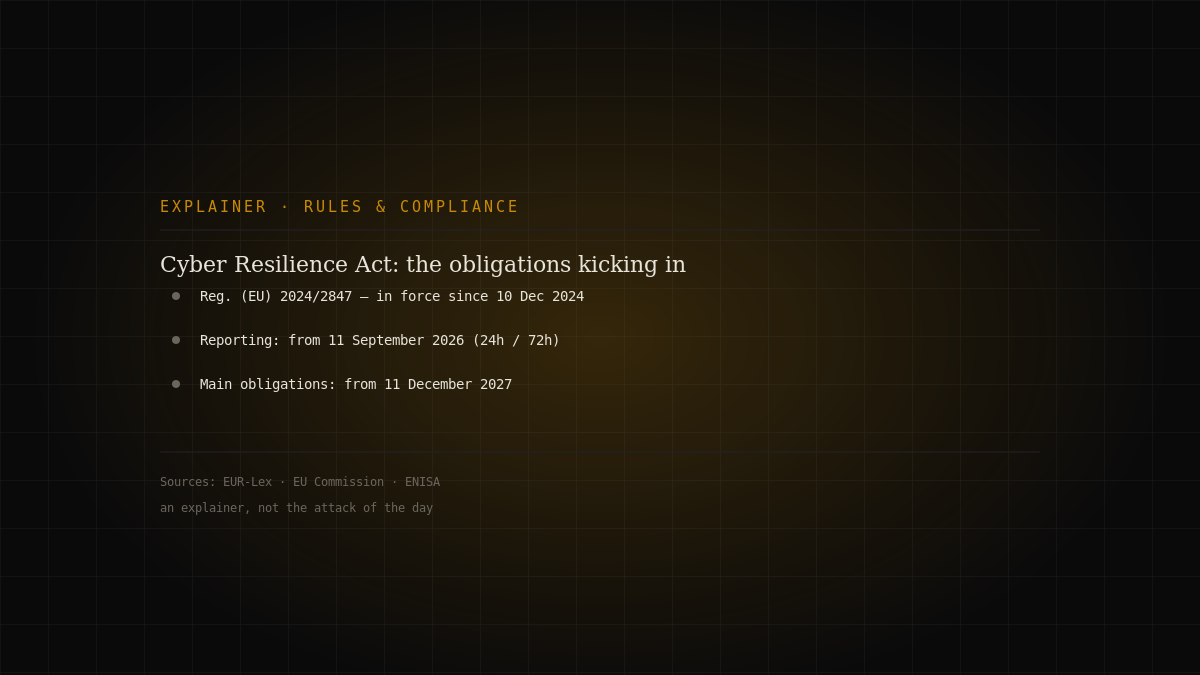
Not an attack, but a deadline drawing closer. The Cyber Resilience Act — Regulation (EU) 2024/2847 — has been in force since 10 December 2024, but its…
The European legal framework rests on interlocking regulations and directives. The GDPR (Reg. EU 2016/679) governs the processing of personal data. NIS2 (Dir. EU 2022/2555) mandates security measures and incident-reporting obligations for operators in critical sectors. DORA (Reg. EU 2022/2554) does the same for the financial sector, with rules on digital operational resilience and critical ICT providers.
Compliance isn't filling in a form: it's a process. Risk analysis, proportionate technical and organisational measures, incident-notification procedures within set deadlines, governance with top-management accountability. NIS2 in particular shifts compliance from the IT department to the board.
The very measures the rules require — asset inventory, patch management, access control, response plans — are the ones that reduce real risk. Compliance done well isn't a cost separate from security: it is security, written down in a verifiable way.